
New Mill
HeritageThe Enduring Legacy of New Mill: High Peak’s Monument to Wind, Water, and Industry
High up in the rugged, atmospheric landscapes of the High Peak, where the winds howl across the moors and the Rivers Goyt and Sett carve their way through solid rock, stands the remarkable town of New Mill. To stand on the edge of the Torrs—a dramatic, seventy-foot-deep natural gorge that slices through the heart of the settlement—is to feel the sheer, unbridled power of nature that birthed an industrial phenomenon. Here, the scent of damp earth and ancient stone mingles with the ghosts of industry. It is a place where the landscape itself dictated human endeavour, forcing the early settlers to harness the elements. The story of New Mill is not just the story of a single building, but of an entire town forged by the relentless grinding of millstones, the spinning of cotton, and the breathtaking ingenuity of generations who turned a hostile gorge into a beating heart of British heritage.
The Origins of a Manorial Hub
The origins of this remarkable settlement, officially designated as a town within the High Peak, stretch back to the late medieval period. Before the sprawling factories and the hum of machinery, this area was a wild, untamed expanse known as the Royal Forest of the Peak. It was a collection of scattered hamlets—Beard, Ollersett, Thornsett, and Whitle—where life was harsh and dictated by the seasons. The transformative moment occurred in or around 1391. The local manor required a centralised, efficient means to process the grain harvested from the unforgiving upland soils. Thus, a manorial corn mill was constructed. Known originally as the "New Mylne," this crucial piece of infrastructure was a marvel of its time. It drew farmers from across the ten hamlets of Bowden Middlecale, acting as a focal point for trade, gossip, and community. The mill was so vital, so central to the daily survival and economic rhythm of the scattered populace, that the burgeoning settlement simply took its name. New Mill was born not from a royal decree, but from the essential, life-sustaining act of grinding corn.
A Narrative of Relentless Growth
The narrative arc of New Mill is one of relentless adaptation. From its origins as an agricultural centre piece, the town was swept up in the fervour of the Industrial Revolution. The late 18th century brought a radical transformation. The immense power of the rivers rushing through the Torrs was harnessed, not just for grinding grain, but for the booming cotton and textile industries. Before the textile boom truly took hold, coal mining scarred the surrounding hills, providing the fuel needed for early, rudimentary steam engines and local forges.


Yet, the story of milling in the United Kingdom is beautifully diverse. While the deep, echoing gorges of the High Peak provided fierce water power, the broader legacy of the name "New Mill" also conjures the iconic windmills that characterised the rural skylines of the era. Structures like classic smock and tower mills represented a different, yet equally vital, mastery of the elements. Historical records of these striking windmills, with their sweeping sails and timber-framed caps, serve as a poignant reminder of an age when the weather dictated the working day. The juxtaposition of the deep, water-powered gorges of the High Peak with the towering, wind-driven structures often associated with the New Mill namesake creates a comprehensive picture of pre-industrial and industrial power generation in Britain.
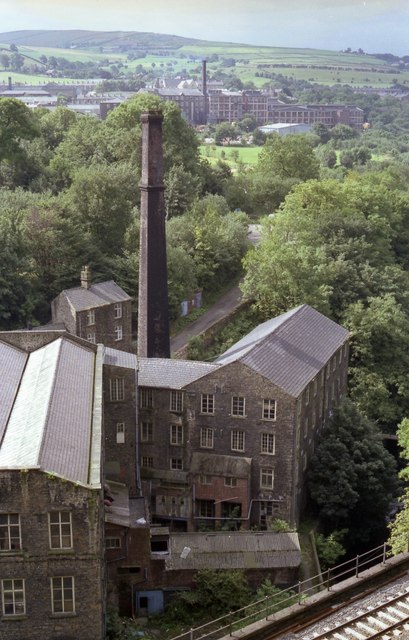
The 19th century saw New Mill expand at a dizzying pace. By 1810, the Torrs gorge was a cacophony of industry, housing nine major cotton mills. The sheer sides of the gorge forced unique architectural solutions; the town is famous for its "underlivings"—homes where one family's dwelling was stacked directly on top of another's, each accessed from different street levels clinging to the steep incline. The arrival of the Peak Forest Canal, and later three separate railway lines, cemented the town's status as a critical node in the global textile trade.


Preserving the Monumental Past
Today, the heritage preserved by the town of New Mill and its dedicated historical societies is truly vast. It operates as an open-air museum of phenomenal scale. The Torrs Riverside Park protects the colossal ruins of the industrial age. The skeletal remains of Torr Vale Mill, which continuously operated for over two centuries until the year 2000, stand as a melancholic but magnificent monument to the workers who spent their lives within its walls.
The preservation efforts go far beyond bricks and mortar. Local archives meticulously maintain the surviving ledgers, the blueprints of the great iron weirs, and the personal diaries of the mill workers. They preserve the physical artefacts: massive, discarded millstones resting in the undergrowth, the intricate ironwork of the sluice gates, and the rare, fragile photographs of the towering windmills that once symbolised the region's agricultural past. Every preserved cobble on the steeply pitched streets, every conserved chimney stack, tells a story of human resilience and engineering brilliance.


The Significance of New Mill
The significance of New Mill cannot be overstated. It is not merely a town in the High Peak; it is a vital microcosm of the British Industrial Revolution. It demonstrates how a remote, agriculturally focused community could, through the sheer force of geographical destiny and human ingenuity, become an industrial powerhouse. It shows the transition from the communal, manorial reliance on a single corn mill to the brutal, awe-inspiring scale of factory production.
Furthermore, the modern iteration of New Mill serves as a masterclass in heritage conservation. By transforming the Torrs into a public park rather than allowing it to be lost to development or decay, the town has ensured that its formidable history remains tangible, accessible, and deeply respected.
Looking to the Future
Looking forward, New Mill stands as a beacon for heritage tourism in the United Kingdom. The ongoing efforts to stabilise the historic ruins, improve the Millennium Walkway, and educate the public ensure that the legacy of the millers, spinners, and miners will never fade. Visitors walking through the gorge today can still feel the damp chill of the rock faces and hear the roar of the rivers—a visceral connection to the centuries of toil that built this incredible place.
As we look back on the remarkable timeline of this High Peak town, we are reminded of how fragile our connection to the past can be. The stories of the people who worked the mills, who navigated the steep, cobbled paths, and who lived in the extraordinary layered houses are often captured only in fleeting, decaying formats. Indeed, this article was partly inspired by old photographs and recordings that came to light when someone brought their personal memories to be digitised. It made us wonder what else is out there — in attics, shoeboxes, old cupboards — connected to New Mill. If anyone holds old media connected to this organisation, services like EachMoment (https://www.eachmoment.co.uk) can help preserve them for future generations.